
If you’re buying, selling, or managing property in Liverpool, Japanese knotweed, as an invasive plant species, usually comes up during standard due diligence once a transaction is underway. It’s rarely noticed proactively, but questions often arise when surveys or professional checks flag a potential issue.


Most people don’t actively look for Japanese knotweed. It usually comes to light during due diligence—when a survey flags a potential issue, a buyer seeks reassurance, or a lender requests confirmation. At that stage, managing uncertainty can be more important than managing the plant itself.
Properties across Liverpool range from tightly packed urban terraces to modern suburban developments. In all cases, Japanese knotweed is treated as a formal due-diligence matter, confirmed and addressed through professional assessment rather than assumed to be present.
What often determines the outcome is how quickly any uncertainty is clarified and documented.
In Liverpool, knotweed concerns most often surface through routine survey or conveyancing enquiries rather than assumptions about the site.
Typical triggers include:
Delays are usually caused not by the plant itself, but by unclear or undocumented information when it’s first raised.
Addressing Japanese knotweed concerns early allows questions to be handled efficiently, without disrupting plans. If issues arise later—after offers are agreed or deadlines are tight—they can create unnecessary uncertainty and require extra clarification from professionals. Infestation can impact property value, so if it is identified early, it can prevent financial implications and structural damage.
For buyers and property owners in Liverpool, the real risk is often the timing of information, not the plant itself.
Clear evidence early preserves options later.
| Situation | Why clarity is needed |
|---|---|
| Selling a property | Buyers or their advisers may request confirmation to proceed confidently |
| Buying a property | Early identification of any knotweed concerns can help avoid complications once committed |
| Land or development sites | Knotweed is considered part of wider risk management, assessed and documented as needed |
Japanese knotweed does not automatically prevent property transactions in Liverpool when it is properly assessed and managed.
Unanswered questions can trigger extra scrutiny from lenders, surveyors, or legal advisers—often at the least convenient stage of the process.
We provide professional Japanese knotweed surveys, treatment and removal services throughout Liverpool, including major areas such as Bootle, Crosby, Garston, Aigburth, Anfield, Toxteth, Woolton and surrounding areas, as well as nearby towns across Merseyside including Wirral, St Helens, and Southport.
If Japanese knotweed has been noted—or you suspect it may be present—the best next step is to get site-specific advice tailored to your situation, rather than relying on assumptions. From then, if knotweed is present, a management plan or Japanese knotweed removal can be arranged.
We establish whether a formal Japanese knotweed assessment is actually needed, based on your specific situation rather than assumptions.
We advise on what type of reporting would be appropriate, proportionate and acceptable to lenders, solicitors or planners.
By dealing with likely questions at the right stage, we help prevent delays, disputes or last-minute requests later in the process.
A brief professional review at the right stage often avoids longer delays later in the process.
A private semi-detached residential property in Liverpool with a Japanese knotweed stand measuring approximately 13 m², adjacent to historic industrial land.
Survey enquiries raised questions about potential spread and required reassurance for the ongoing transaction.
A professional assessment confirmed the Japanese knotweed stand, and a documented herbicide treatment with exclusion measures provided a clear management record.
The documented approach allowed the transaction to proceed without further delay, with treatment costs estimated at £2,108.20 + VAT.
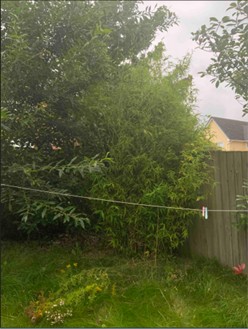
Yes. We offer professional Japanese Knotweed excavation and removal across Liverpool, including surrounding areas like Wirral, Bootle, Walton, and Crosby. Both residential and commercial properties are covered, and all work complies with local regulations.
Japanese Knotweed is frequently found in Liverpool, particularly along riverbanks, canals, derelict industrial land, and older urban sites. Redeveloped housing estates and former docklands are also hotspots for growth due to historic soil disturbance.
Excavation is often the preferred solution in Liverpool when:
A property sale or mortgage is planned
Construction, landscaping, or extensions are planned
Knotweed growth is extensive or near buildings
Excavation removes the plant and contaminated soil quickly, offering a long-term, reliable solution compared to ongoing chemical treatments.
All removed Japanese Knotweed is treated as controlled waste under the Environmental Protection Act 1990. We transport it using licensed carriers to approved landfill sites in Liverpool and the surrounding Merseyside area, ensuring safe disposal and no risk of re-infestation.
Before starting any excavation, we conduct a site-specific risk assessment, especially in Liverpool’s dense residential areas or properties near shared boundaries, public land, or waterways. Excavation is carefully controlled to prevent the spread of Japanese Knotweed to adjacent properties.
Yes. All Japanese Knotweed excavation projects in Liverpool can include a Company Guarantee or Insurance-Backed Guarantee, giving protection for up to 10 years. These guarantees are often required by lenders, surveyors, or solicitors during property transactions.