
When invasive plants are involved in a legal dispute, opinion isn’t enough.
Courts require independent, procedurally compliant expert evidence prepared in accordance with Civil Procedure Rules Part 35.
We provide Part 35 expert reports relating to Japanese knotweed, bamboo, giant hogweed, Himalayan balsam & other invasive plants — for use in litigation, pre-action disputes & formal resolution.


A Part 35 report is an independent expert report prepared for legal proceedings, governed by strict procedural rules.
Its purpose is not to support a party’s position. Its duty is to assist the court.
That independence — combined with transparent methodology and clear separation of fact and opinion — is what gives a Part 35 report evidential weight.
In many Japanese knotweed disputes, progress only resumes once there is independent evidence everyone can rely on.
Typical situations where a P35 CPR compliant report for Japanese Knotweed is required when:
A property sale or purchase has stalled due to knotweed concerns
A neighbour dispute has escalated beyond informal discussion
A mortgage lender or insurer has requested independent evidence
Conflicting surveys or opinions are preventing agreement
If any of these apply, independent Part 35 evidence can help move things forward.
Visit our P35 for Japanese Knotweed page for more details.
When instructed under Part 35, we act solely as independent experts.
This means:
Our role is to establish facts, assess risk, and explain technical matters clearly — so the court can reach an informed decision.
When instructed under Part 35, our role is not to advise on outcomes, but to assist the court by addressing defined technical questions, typically including:
| Assessment point | What is considered |
|---|---|
| Presence and activity | Whether invasive plant growth is present, historic or currently active. |
| Origin and pathways of spread | The likely source of growth and mechanisms of spread, including interaction across boundaries. |
| Foreseeability | Whether spread was reasonably foreseeable at the material time. |
| Reasonableness of actions | Whether actions taken, or not taken, were reasonable and proportionate in the circumstances. |
| Attribution of loss or risk | Whether any alleged loss or risk can be technically attributed to the presence of the plant. |
| Appropriateness of remediation | Whether proposed remediation measures are necessary, excessive or insufficient. |
Each report is structured to address these matters explicitly, with clear separation between observed fact, assumed fact, and expert opinion, as required by CPR Part 35.
Our P35-compliant Expert Witness reporting services are available in a wide range of locations — see our coverage areas here.
We provide Part 35 expertise relating to:
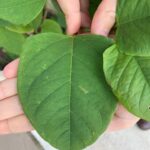
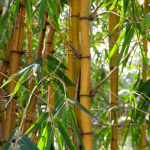
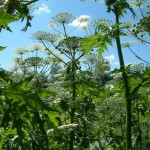


A properly prepared Part 35 report is not about persuasion.
It is about controlling litigation risk.
Specifically, it helps prevent:
Clear expert evidence often narrows disputes before trial — or determines whether proceedings are viable at all.
When acting as a Part 35 expert, our sole duty is to the court, not to the instructing party.
To preserve independence:
We are instructed by:
(via legal representation)
Early instruction often prevents escalation. Late instruction often clarifies it.
The scope of instruction is agreed and the legal questions to be addressed are defined in writing.
This includes site inspection, relevant documents, plans and any disclosure material provided.
A formal expert report is produced in full compliance with CPR Part 35, including the required declarations.
Any written questions under CPR 35.6 are considered and responded to formally.
Joint discussions with other experts may take place, followed by preparation of a joint statement.
The report may be relied upon at settlement, mediation or trial, as directed.
A private residential property in Bristol involving claimant and defendant, where Japanese knotweed was identified within the garden and on neighbouring land.
A small outgrowth (c.1 m², 1.2 m high, 5+ years) was present within the claimant’s garden adjacent to the left-hand boundary. A larger neighbouring stand (c.10 m², 1.2 m high, 5+ years) is considered the primary infestation. On the balance of probabilities, the smaller stand resulted from underground rhizome spread from the neighbouring property. No structural damage was observed, but the risk of re-infestation is high if the neighbouring stand is not fully treated.
Specialist herbicide treatment, using spraying and injection, was recommended across both affected areas, supported by a long-term insurance-backed guarantee.
The expert report confirmed the origin, pathway of spread, and ongoing risk, providing a clear strategy for effective eradication and long-term control. The total cost of the works was £4,236.50 + VAT.
A private residential dispute in Birmingham involving claimant and defendant, with Japanese knotweed identified across neighbouring rear gardens.
Three stands were recorded: Stand 1 (c.10 m², 2.4 m high), identified as the primary and original stand; Stand 2 (c.12 m², 2.4 m high) in a neighbouring garden along the right-hand boundary; and Stand 3 (c.4 m², 0.6 m high) in a neighbouring garden along the left-hand boundary. Stands 1 and 2 were assessed as 10+ years old, with Stand 3 approximately 1+ year old, supporting sequential spread via underground rhizomes. No structural damage was identified, though the infestation was patently obvious on the offending land.
All stands were generally healthy with no evidence of prior treatment. Professional treatment was recommended across all affected land, including the originating stand, using spraying and injection of a glyphosate-based herbicide, supported by a 10-year insurance-backed guarantee.
The expert report confirmed the likely origin and pathway of spread and set out a clear strategy to prevent further encroachment and achieve long-term control. The total cost of the works was £4,300 + VAT.
A private residential matter in Bedfordshire involving claimant and defendant, where Japanese knotweed was present across the rear gardens of several adjoining properties.
A single interconnected stand was identified, covering approximately 48 m² at its largest area, 20 m² in a neighbouring section, and less than 1 m² elsewhere. The infestation averaged 2.4 m in height, was over 10 years old, located around 2 m from the properties, and showed no evidence of prior treatment. On the balance of probabilities, the extent and pattern of growth indicate encroachment from neighbouring land, with unmanaged surrounding infestations presenting an ongoing risk of re-infestation.
A site plan was prepared using HM Land Registry boundaries and visual inspection data. Professional treatment across all affected and neighbouring areas was recommended, using spraying and injection of a glyphosate-based herbicide, supported by a 10-year insurance-backed guarantee.
The expert report confirmed the extent and likely origin of the infestation and set out a clear strategy for effective long-term control and prevention of recurrence. The total cost of the works was £8,781.35 + VAT.
A private residential property in Leicester, where a large, well-established Japanese knotweed stand was identified on neighbouring land.
Stand 1 (over 500 m², 2.4 m high, 20+ years) is located approximately 2 m from the property boundary in a high-risk area near a waterway. Visible knotweed on neighbouring land supports the conclusion that, on the balance of probabilities, rhizomes may extend beneath the boundary, creating a high risk of colonisation. Evidence of prior chemical treatment was noted, but no above-ground growth was observed on the affected property.
Specialist herbicide spraying and injection was recommended, supported by a 10-year insurance-backed guarantee, to prevent encroachment and achieve long-term control.
The expert report confirmed the likely pathway of spread and foreseeable risk, providing a clear strategy for effective eradication and protection of the affected property. Treatment costs were assessed in line with the recommended professional programme.
A private residential property in Surrey involving claimant and defendant, where Japanese knotweed was identified within the affected garden and on neighbouring land.
A small stand (less than 1 m², approximately 0.5 m high) was identified adjacent to the right-hand boundary, around 4 m from the property. A significantly larger stand (over 10 m²) was present on neighbouring land. On the balance of probabilities, the infestation within the affected garden originated from the neighbouring land, supported by growth patterns, photographic evidence, and signs of vegetation burning and mismanagement nearby. The affected stand was estimated to be around one year old and showed signs of pre-treatment.
To achieve full eradication and prevent further spread, a professional treatment programme involving spraying and injection of a glyphosate-based herbicide was recommended, supported by a 10-year insurance-backed guarantee.
The expert report confirmed the likely origin of the infestation and set out a clear, proportionate strategy for effective long-term control and prevention of recurrence. The total cost of the works was £4,369.50 + VAT.
A private residential property in Sheffield involving claimant and defendant, where two Japanese knotweed stands were identified within the garden and on adjacent land.
Stand 1 (c.70 m², 2 m high, 10+ years) is located within the rear garden and is considered the primary infestation. Stand 2 (c.20 m², 2 m high, 10+ years) is on adjacent land, approximately 15 m from the property, and on the balance of probabilities derived from Stand 1 via underground rhizome spread. Both stands are healthy with no pre-treatment, and the presence of visible knotweed nearby highlights a high risk of further propagation to surrounding properties.
A professional programme of spraying and injection using a glyphosate-based herbicide was recommended, supported by a long-term, insurance-backed guarantee, to prevent repopulation and manage ongoing risk.
The expert report confirmed the origin, pathway of spread, and foreseeable risk, providing a clear strategy for effective long-term control of the infestation. Treatment costs were assessed in line with the recommended professional programme.
A private residential property in Liverpool, where a large stand of Japanese knotweed was identified along a railway embankment at the rear of the property.
Stand 1 (c.300 m², 20+ years) is consistent with historical planting by British Rail and represents the likely source of infestation. No above-ground growth was noted on the property, though on the balance of probabilities rhizomes have extended beneath the boundary, presenting a high risk of encroachment if untreated. No visible structural damage was observed, though a structural survey is recommended.
Specialist herbicide spraying and injection was recommended, alongside management of the source on the railway embankment, to prevent repopulation and achieve long-term control.
The expert report confirmed the likely origin, pathway of spread, and foreseeable risk, providing a clear strategy for protection of the property. Treatment costs were assessed in line with the recommended professional programme.
A private residential property in Leeds, where a significant Japanese knotweed stand was identified on neighbouring land adjacent to the rear and side boundaries of the property.
Mitigation was recommended through installation of a vertical root barrier along the boundary and urgent remediation by the neighbouring landowner to prevent encroachment.
A full excavation was recommended and carried out to remove all bamboo material and associated rhizomes. Works were supported by a five-year company guarantee.
The expert report confirmed the likely source, potential pathway of spread, and foreseeable risk, providing a clear strategy for long-term protection of the affected property. The total cost of the works was £25,448.75+ VAT.
A private residential property in Greater Manchester involving claimant and defendant, with Japanese knotweed present on neighbouring land and within the affected garden.
Two stands were identified. Stand 1 (c.14 m², 10+ years old) was located on neighbouring land to the rear of the garden, approximately 7 m from the property. Stand 2 (less than 1 m², under one year old) was present within the claimant’s rear garden, approximately 1.5 m from the house. Both stands had been chemically pre-treated and were low in height. On the balance of probabilities, Stand 2 originated from Stand 1 via underground rhizome spread, as it lies within the root zone of the older infestation. The presence of knotweed on neighbouring land was considered patently obvious.
Given the proximity to a railway line and the risk of further propagation, a professional treatment programme involving spraying and injection of a glyphosate-based herbicide was recommended, supported by a 10-year insurance-backed guarantee.
The expert report confirmed the likely pathway of spread and set out a clear strategy to achieve full eradication and prevent further encroachment. Treatment costs were assessed in line with the recommended professional programme and supported by a 10-year insurance-backed guarantee.
A private residential property in London involving claimant and defendant, where Japanese knotweed was identified within the affected garden and adjoining neighbouring land.
Three stands were identified: Stand 1 (c.6 m²) in the rear garden between a greenhouse and the right-hand boundary, spreading into the neighbouring garden; Stand 2 (c.1 m²) nearby with spread beneath the rear boundary fence; and Stand 3 (c.1 m²) within the neighbouring garden adjacent to a rear garage. All stands were estimated to be over five years old. On the balance of probabilities, the infestation likely originated from a carried propagule, with roots and rhizomes present across adjoining properties, creating a high risk of continued spread if untreated. A larger stand of approximately 110 m² was also noted nearby, highlighting wider propagation risk.
Professional treatment was recommended across affected land using spraying and injection of a glyphosate-based herbicide, supported by a 10-year insurance-backed guarantee, to achieve effective long-term control and prevent further encroachment.
The expert report established the extent, likely origin, and risk of spread, providing a clear and proportionate strategy for eradication and ongoing protection of the affected properties. The total cost of the works was £4,864.50 + VAT.
A private residential property in Nottingham, where a single stand of Japanese knotweed was identified at the rear of the property.
Stand 1 (c.150 m², 2 m high, 20+ years) is located near a railway line, the likely primary source of the infestation. Visible knotweed on neighbouring land supports the conclusion that, on the balance of probabilities, rhizomes have spread beneath the boundary from the railway embankment. A crack in the rear wall was noted, though a structural survey is recommended to confirm any damage.
Specialist herbicide spraying and injection was recommended, with ongoing management of the source on the railway line to prevent repopulation.
The expert report confirmed the likely origin and pathway of spread, providing a clear strategy for effective long-term control and protection of the affected property. Treatment costs were assessed in line with the recommended professional programme.
When invasive species are part of a dispute, uncertainty quickly becomes liability.
If Japanese knotweed or other invasive growth is contributing to a boundary dispute, claim, or legal process, the next step is to establish a clear, independent expert position that can withstand scrutiny.
These guarantees are designed to provide long-term assurance, supporting future sales, lending decisions, and ongoing management where required.
No. A Part 35 report is a formal legal document prepared specifically for use in litigation or dispute resolution and must comply with the Civil Procedure Rules. Surveys and management plans are advisory documents and do not meet the procedural, evidential, or independence requirements of CPR Part 35. A report that is not Part 35 compliant cannot be relied upon as expert evidence by the court.
No. Independence is fundamental under CPR Part 35. An expert must have no financial or commercial interest in the outcome of the dispute. Acting as both expert and contractor would create a conflict of interest and undermine the admissibility and weight of the evidence. Where we are instructed as Part 35 experts, we do not undertake any treatment, removal, or remediation works connected to the site.
Yes — and this is expected. Part 35 reports are frequently tested through written questions under CPR 35.6, expert meetings, joint statements, and cross-examination. This is why procedural compliance, transparent methodology, clear reasoning, and a strict separation of fact and opinion are essential. Reports that lack clarity or independence are vulnerable to being limited or excluded.
No. A Part 35 report does not determine liability, fault, or outcome. Its purpose is to assist the court by providing independent expert evidence on defined technical matters. The court determines liability after considering all evidence, including expert reports from one or more parties.
As early as practicable once it is clear that invasive plants are central to a dispute. Early expert input can clarify technical positions, narrow issues, and prevent unnecessary escalation. In some cases, early instruction identifies that claims are not technically supported, allowing matters to resolve before costs increase.
Yes. Part 35 experts are frequently instructed during the pre-action phase. A compliant expert report can inform correspondence, pre-action protocols, mediation, or early settlement discussions. The same procedural standards apply whether the report is used pre-action or during formal proceedings.
A Part 35 report is based on a combination of site inspection, documentary evidence, and disclosed material. This may include surveys, historical plans, conveyancing documents, correspondence, photographs, and third-party reports. All assumptions are clearly stated, and limitations are explicitly identified, as required by CPR Part 35.
Yes, where appropriate. We can act as a Single Joint Expert instructed by both parties under CPR Part 35.7. In these cases, our duty remains solely to the court, and the report is prepared on a neutral basis addressing agreed questions. Single joint expert instruction can reduce cost, narrow issues, and support proportionate resolution.
We provide Part 35 expertise relating to Japanese knotweed, bamboo, giant hogweed, Himalayan balsam, and other invasive or persistent plant species where origin, spread, impact, or responsibility is disputed. Each report is species-specific and tailored to the technical questions raised by the dispute.
Not automatically. However, clear, independent expert evidence often narrows the issues in dispute, informs realistic settlement discussions, or determines whether proceedings are viable. In many cases, disputes resolve once technical uncertainty is removed.
This depends on the nature of the dispute and how central invasive plants are to the issues being argued. If technical matters such as origin, spread, risk, or remediation are disputed — and opinion evidence is required — a Part 35 expert is usually necessary. We can confirm whether Part 35 instruction is appropriate before any formal appointment is made.
Yes. Many are commissioned during pre-action protocols and contribute to early resolution.
If you’re considering Part 35 instruction — or need to understand whether it’s appropriate — speak to our team in confidence.
We’ll confirm whether expert evidence is required and how best to proceed within the rules.